Choosing the best Amboseli camp for Kilimanjaro photography is a sharper question than simply asking where the mountain looks best. A great photograph of Kilimanjaro in Amboseli depends on more than a room with a view. It depends on dawn timing, repeated attempts over multiple mornings, open foreground options, and a camp structure that lets you be positioned in the right place at the right hour.
This guide cuts through the property list and focuses on what actually matters for photo-focused stays in Amboseli, which camps rise to the top, and why the itinerary around the camp matters nearly as much as the camp itself.
The Short Answer
For most photographers, the shortlist starts here:
- Ol Tukai Lodge for the most accessible classic elephant-and-mountain base
- Tawi Lodge for a mountain-facing private conservancy stay
- Tortilis Camp for boutique atmosphere combined with strong scenic access
For family-friendly photography with reliable logistics:
- Amboseli Serena Safari Lodge
For value-led photography without sacrificing reserve access:
- Kibo Safari Camp
The right choice among these depends on whether you prioritize room view, dawn game-drive access, boutique atmosphere, or budget. Each of those priorities leads somewhere slightly different.
Why Camp Choice Matters for Kilimanjaro Photography
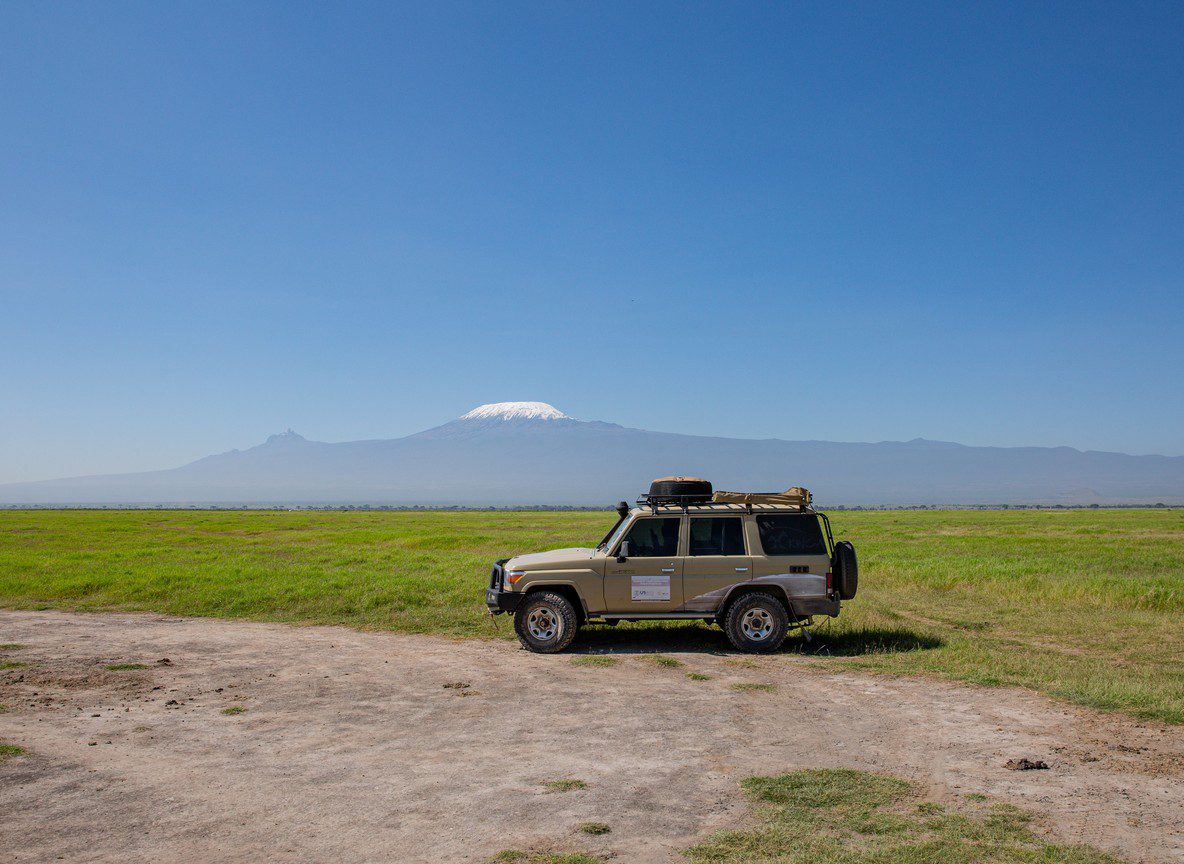
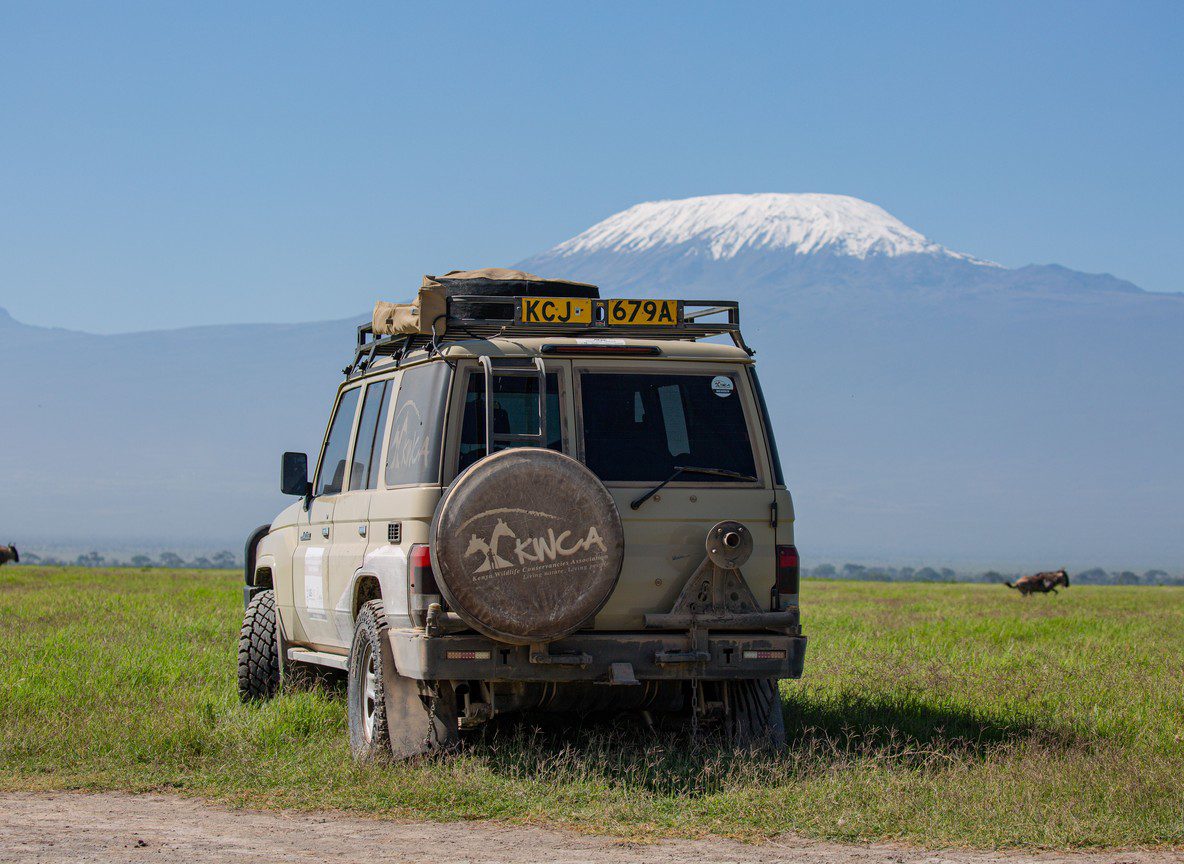
Kilimanjaro is visible from Amboseli for a predictable window: typically the early morning before heat haze builds. The mountain is often cloud-free at dawn, but by 8-9am, cloud builds around the summit on most days. After midday, the mountain is frequently invisible from the plains.
That time window is the critical variable. A camp that gets you into the field at first light without transfer friction gives you the best chance of capitalizing on clear views. A camp that requires a gate transfer or long pre-dawn drive can cost you the exact window the photography depends on.
Inside-park camps like Ol Tukai have a structural advantage here. Conservancy camps like Tawi and Tortilis have a different advantage: off-road capability and potentially closer positioning relative to certain compositions.
Both approaches work. The choice is a matter of which trade-off fits your specific shooting goals.
Ol Tukai Lodge: The Classic Photography Base
Ol Tukai Lodge sits inside Amboseli National Park, in the area that is most consistently associated with the iconic elephant-and-Kilimanjaro composition. The Ol Tukai area sits near the swamps that attract large elephant herds year-round, with the open plains providing clear sightlines to the mountain.
Official room descriptions for Ol Tukai specifically reference wetlands or Kilimanjaro views, which is unusual clarity in hotel marketing. Most rooms face the right direction. The Ol Tukai area is repeatedly cited across Amboseli photography guides as one of the strongest positions for the classic composition.
Why Ol Tukai works for photographers:
- Inside the park means no gate delay at dawn
- Proximity to the swamps where elephant concentrate in large family groups
- Open plains between the lodge and the mountain provide foreground variety
- Easy to pair with Observation Hill, which gives elevated framing options
- Clear trail access to reliable early-morning positions
Best for:
- First-time Kilimanjaro photographers who want the most straightforward path to the shot
- Guests on shorter itineraries (2-3 nights) who need clean logistics and no friction
- Travelers who want the elephant-and-mountain combination as their central goal
Ol Tukai is rarely the wrong answer if the brief is “best single camp for first-time Amboseli photography.” It is dependable in a way that matters when you only have a few mornings.
Tawi Lodge: Mountain-Facing Private Conservancy
Tawi Lodge operates on a private conservancy approximately five minutes from Kimana Gate, adjacent to Amboseli National Park. All of its cottages are described as having spectacular Kilimanjaro views, and the property sits on the lower foothills approaching the mountain, which creates a genuinely different relationship with the mountain than a plains-based camp.
The Tawi position means:
- The mountain is physically closer and appears larger in the frame
- Room views face the mountain throughout the day, not just on morning drives
- The conservancy setting allows for walk options and quieter atmospheric time around the mountain
- Less vehicle density than the main park area
Why Tawi suits certain photographers:
- Travelers who want mountain mood built into the whole stay, not only on drives
- Couples who want a scenic, quieter atmosphere combined with photography goals
- Guests who value wide-angle landscape compositions where the mountain is the primary subject rather than a backdrop
- Photographers planning longer stays (3+ nights) who want the mountain as a constant presence
The main consideration: Tawi’s conservancy position is outside the park boundary, so it involves a gate transfer to access the swamp elephant zones where the classic multi-subject compositions happen. The mountain view from the conservancy is arguably better than from the park interior. The elephant proximity requires driving in.
Tortilis Camp: Boutique Mood with Strong Scenic Access
Tortilis Camp sits on the southwestern edge of Amboseli, with both park and conservancy access. The camp’s official material leans heavily into dramatic Kilimanjaro views, and the property’s physical position on the mountain-facing southwest side gives it a particular atmospheric quality at dawn.
Tortilis features private verandas, a strong sense of place, and family tent and private house options that make it a natural choice for guests who want the trip to feel curated rather than purely efficient. The camp is often described as one of the more atmospheric Amboseli options, and that atmosphere extends to the photography experience around a stay here.
Why Tortilis works for photographers:
- Southwestern position often catches different dawn light quality than the central park camps
- Conservancy component allows off-road approach and walking options
- Strong verandah design means good compositions are available without leaving the camp
- Both park and conservancy access means route flexibility across a multi-day stay
- The family tent and private house set up are good for photography-focused small groups
Best for:
- Repeat Amboseli visitors who want a different angle on the mountain
- Couples on photography-focused trips who want atmosphere as well as images
- Guests who value the whole stay feeling scenic, not only the game-drive component
Amboseli Serena Safari Lodge: Reliable Family-Friendly Photography
Amboseli Serena is not always marketed directly to photographers, but it deserves a place in this comparison because it delivers on several photography-relevant criteria while being the clearest option for families and first-time visitors.
What Serena offers:
- Rooms and balconies overlook the park grasslands toward the mountain
- Inside-park position means no gate delay at dawn
- Clean, organized operations that remove uncertainty from the daily schedule
- Large pool area and grounds with decent foreground options for camp-area photography
Why Serena belongs in the photography conversation:
- The mountain view from rooms and common areas is genuine and strong
- The elephant swamp zones are accessible without long drives
- The operational reliability reduces the variables that can undermine photography-focused mornings
- Family-format photography trips (parents photographing while children participate in other activities) are well-supported here
Serena is best described as the “clean and solid” photography answer. It will not give you the boutique atmosphere of Tortilis or the mountain proximity of Tawi. But it will give you a very good chance of the elephant-and-Kilimanjaro shot without any logistical complexity.
Kibo Safari Camp: Value-Led Photography
Kibo Safari Camp is worth including for travelers whose budget makes the premium properties genuinely inaccessible, or who want to allocate more nights and more drives rather than more accommodation luxury.
Kibo is a larger-scale tented camp near the park. It offers:
- Practical reserve access for repeated game drives
- Large tented accommodation that can work well for groups
- A lower nightly rate that can translate to extra safari days
For photography, more days sometimes matters more than more luxury. Two nights at a premium camp versus four nights at Kibo gives you very different morning opportunities. More mornings means more chances at a clear Kilimanjaro morning, more attempts at the right light, more patience without pressure.
Best for:
- Value-focused photographers who prioritize drive time over room quality
- Groups where budget spreads across multiple travelers
- Travelers who see accommodation as a base rather than part of the experience
What Matters More Than the Camp Name
This is the most important section of this guide for any serious photographer planning an Amboseli trip.
The best Kilimanjaro photography stay usually comes down to these practical factors:
How many mornings you have. The mountain does not perform on every dawn. Cloud, haze, and timing conspire against clean views regularly. Two nights gives you two morning attempts. Three nights gives you three. The probability math is straightforward.
How early your guide gets you out. The difference between being on the plains at 6:00am versus 6:45am is not trivial when dawn light lasts until approximately 7:30am on a good morning.
Whether your vehicle can position correctly. Off-road capability in conservancy areas means you can approach without the track constraint. In the national park, you stay on established routes.
Foreground quality. The elephant-and-mountain frame requires elephant near the mountain. Early-season and low-water months concentrate elephants near the swamps, which improves your odds of the classic composition.
Patience. The mountain does not reward rushed mornings. Camps that support a slow, patient approach to photography – flexible breakfast timing, willingness to stay stationary at a composition rather than constantly moving – tend to produce better images than camps with rigid schedule structures.
Those factors are harder to assess from a website than the room photographs. Ask specifically about them when making enquiries.
Quick Comparison
| Camp | Strongest For | Mountain Access | Main Consideration |
|---|---|---|---|
| Ol Tukai Lodge | Classic Amboseli photography | Inside park, open plains facing mountain | Busier than conservancy options |
| Tawi Lodge | Mountain-proximity scenic stays | Mountain-facing conservancy, spectacular views | Requires drive to elephant swamp zones |
| Tortilis Camp | Boutique photography mood | Southwest position, park and conservancy access | Higher price point |
| Amboseli Serena | Family-friendly photography | Inside park with grassland mountain views | Less intimate than boutique camps |
| Kibo Safari Camp | Value-led photography | Practical park access | Less premium scenic positioning |
Planning Your Amboseli Photography Stay
A few practical notes before you commit:
The mountain is most visible in dry season (June-October) but can be clear year-round. The short rains (November) and long rains (April-May) increase cloud cover and can limit mountain visibility significantly.
Plan for at least three mornings. Two mornings can work but you have very little buffer for a bad weather day. Three mornings gives you genuine recovery if morning one or two is clouded over.
Confirm your guide’s approach to photography mornings. Some guides are excellent at positioning for the mountain composition. Others prioritize animal movement over mountain framing. If Kilimanjaro is your primary goal, say so clearly.
Ask about specific room orientation. At most of these camps, room views vary across the property. Getting a mountain-facing room is worth requesting specifically.
Conclusion
The best Amboseli camp for Kilimanjaro photography is not a single definitive answer. It is a shortlist shaped by your priorities.
For the most accessible first-timer mountain photography base, start with Ol Tukai. For mountain mood built into the whole stay, compare Tawi and Tortilis. For a family-friendly photography structure, Serena covers the brief. For value and more mornings over more luxury, Kibo is the practical answer.
Beyond the camp choice, what gives you the best Kilimanjaro photographs in Amboseli is time: enough mornings to wait for the mountain to perform, a guide who knows how to position, and a willingness to be patient when the light is right.
Where to Read More
For broader Amboseli accommodation comparisons, itinerary planning, and seasonal guides, visit touringinsights.com. For official Amboseli National Park information, the Kenya Wildlife Service has current park and access details.
If this guide has you ready to travel, a safari specialist can handle the route, camps, and logistics end to end.
Want to Book a Tour With Us?